




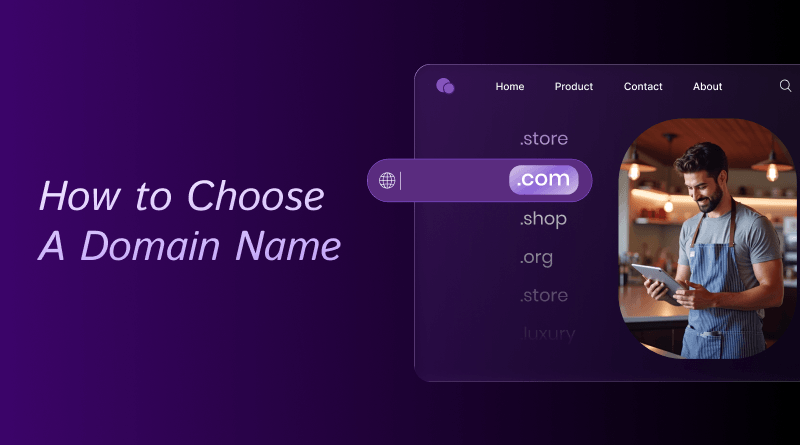
Choosing a domain name may look like a small decision, but it can shape how people remember, trust, and find your website. Your domain appears on your business cards, emails, search results, and social profiles, so a confusing or forgettable name can create friction before someone even visits your site.
The challenge is finding a name that is simple enough to remember, distinctive enough to build a brand, and flexible enough to grow with your business. You also need to consider the domain extension, availability, trademark conflicts, and how easy the name is to spell.
In this guide, you’ll learn how to choose a domain name for your website with a simple step-by-step process, from brainstorming ideas to checking the final name before registration.
How to Choose a Domain Name: Quick Answer
Choose a domain name that is short, memorable, easy to spell, easy to pronounce, and closely aligned with your brand. Avoid unnecessary numbers, hyphens, or complicated spellings that can make the address harder to remember or share. Pick a domain extension that fits your audience, such as .com for a general business or .in for an India-focused website.
Before registering, check the domain’s availability and search for potential trademark conflicts or confusingly similar brands. Finally, make sure the name can still represent your business if your products, services, or target market expand.
The steps below will help you evaluate each domain idea before making a decision.
7 Steps to Choose the Right Domain Name
1. Start With Your Brand
Define your business, audience, services, and plans before choosing a domain. Pick a name that represents your brand today without limiting where the business can go tomorrow.
2. Keep It Simple & Memorable
Choose a domain that people can remember and type without hesitation. Avoid unnecessarily long or complicated names, but don’t sacrifice clarity just to cut characters.
3. Make It Easy to Spell & Pronounce
A domain should be easy to understand when someone hears it. Try the 5-second test: say the name once and ask someone to type it without seeing it. If they struggle, consider another option.
4. Choose a Brandable Name
A memorable brand name is often more useful than a keyword-packed domain. Your domain doesn’t need to describe everything you sell.
Does a domain name affect SEO?
Your domain name alone does not guarantee higher search rankings. Using a keyword in your domain can describe your business, but it isn’t a shortcut to better rankings. Focus on a memorable brand, useful content, technical SEO, and a good user experience.
5. Avoid Unnecessary Numbers & Hyphens
Numbers and hyphens can make domains harder to communicate or remember. Use them only when they have a clear purpose for your brand.
6. Choose the Right Domain Extension
Pick an extension that matches your website and audience:
- .com: General businesses and websites
- .in: India-focused businesses
- .org: Organizations and community-focused websites
- .net: A general-purpose extension often associated with technology and internet businesses
- .ai: AI-focused businesses and products
- .tech: Technology brands and projects
Is .com the best domain extension?
.com is a familiar choice for many businesses, but it isn’t mandatory. A relevant alternative such as .in can make more sense for a specific audience.
7. Check Availability, Trademarks & Social Handles
Before registering, check domain availability, search Google for similar brands, review relevant trademark databases, and look for obvious conflicts on major social platforms.
Remember: domain availability does not guarantee that the name is free from trademark conflicts.
What If Your Domain Name Is Already Taken?
Finding that your preferred domain is already registered doesn’t mean you have to settle for a poor name. Start by trying a simple brand variation that keeps the original idea intact. You can also consider a relevant domain extension, such as .in for an India-focused business or another suitable TLD.
Another option is adding a meaningful word that naturally fits your brand. Avoid adding random numbers, extra words, or awkward hyphens simply to make the domain available. These changes can make the name harder to remember and share.
If the domain is already being used by another business, choosing a different name is usually the safer approach, especially if there is a potential trademark conflict. If the domain is registered but unused and important to your brand, you may consider contacting the owner to discuss a purchase.
The best alternative isn’t always the closest variation. If every option feels forced, step back and create a fresh brand name that works well as both a business identity and a domain.
How to Check a Domain Before Buying It
Before registering a domain, don’t stop at checking whether it’s available. Take a few minutes to make sure the name is usable, brand-safe, and suitable for your business.
If the domain was previously registered, check its history using archived versions of the website and search results. Look for signs of spam, misleading content, an unrelated business, or other questionable past use. Available registration and backlink information can also provide useful context.
Next, search for similar businesses, brands, and trademarks. Domain availability does not guarantee that the name is free from trademark conflicts. It’s also worth checking major social platforms to see whether your brand name is already strongly associated with another business.
Before you register, make sure your domain:
- Is easy to remember, spell, and pronounce
- Is simple without unnecessary numbers or hyphens
- Fits your chosen TLD and target audience
- Is distinctive and suitable for your brand
- Has no obvious trademark or brand conflicts
- Has no concerning previous use, if it was registered before
- Can still represent your business as it grows
- Has a reasonably consistent presence across important social platforms
Finally, run the 5-second test. Say the domain to someone who hasn’t seen it and ask them to type it. If they can get it right without clarification, you’ve got a strong usability signal.
An available domain is only the starting point. Check its name, history, brand conflicts, and usability before you register it.
Can You Change Your Domain Name Later?
Yes, you can change your domain name later, but it should be treated as a proper website migration rather than simply buying a new domain. A domain change can affect your search visibility temporarily if important signals are not transferred correctly.
If you change domains, set up 301 redirects from the old URLs to their corresponding new URLs, update internal links and canonical URLs, and verify the new domain in Google Search Console. Also update your business listings, email addresses, social profiles, and other important references.
Changing a domain unnecessarily can create extra work and SEO risks, so choosing a suitable name from the beginning is usually the better approach.
Register Your Domain & Get Your Website Online With BigCloudy
Found a domain name that fits your brand? The next step is getting your website online with hosting that can support it as your business grows.
With BigCloudy, you can register your domain and choose hosting for websites of different sizes, from a new business website to a growing WordPress site. You can manage your domain and hosting from one place while getting features such as free SSL, NVMe SSD storage, LiteSpeed Web Server, Cloudflare CDN integration, and daily JetBackup backups on eligible hosting plans.
If you’re launching a new website, choosing the domain is only the beginning. Pair a memorable domain with reliable hosting, strong security, and the performance your visitors expect.
Choose your domain. Build your website. Grow your online presence with BigCloudy.
FAQs
A good domain name is easy to remember, spell, and pronounce. It should reflect your brand, avoid unnecessary complexity, and remain relevant as your business grows.
There is no fixed ideal length, but shorter domains are generally easier to remember and type. Prioritize clarity over forcing the name into fewer characters.
You can use a relevant keyword, but it isn’t necessary for SEO. A clear, memorable, and brandable domain is usually a better long-term choice than a keyword-stuffed name.
Neither is universally better. .com is a familiar choice for general websites, while .in can be a strong fit for businesses primarily serving an Indian audience.
Yes, changing domains can temporarily affect organic visibility if the migration isn’t handled correctly. Use permanent redirects, update internal links, and verify the new domain in relevant search tools to help search engines process the change.